A salvage title lowers value by a discount you measure from comparable listings in your market, so this page gives you the method and the drivers, not one percentage. Below: what drives the discount, how to estimate your specific situation, and where a single published range breaks down in practice.
For an interactive estimate, use the Salvage Car Value Calculator. If the car has already been repaired and re-titled, use the rebuilt title value calculator instead.
LocalIQ™ market snapshot
What top flip candidates are asking right now
| Model | Listings | Median asking price |
|---|---|---|
| GMC Sierra 1500 | 636 | $29,918 |
| Honda Civic | 5,496 | $15,000 |
| Honda Accord | 4,265 | $15,999 |
| Ford F-150 | 3,156 | $24,000 |
| Toyota Corolla | 3,111 | $14,500 |
| Nissan Sentra | 3,087 | $9,800 |
| Toyota Camry | 2,558 | $17,000 |
| Hyundai Elantra | 2,419 | $9,500 |
LocalIQ™ asking-price median · 24,728 listings · updated every 6 hours. National, last 8 model years; asking price is your resale ceiling.
Why we do not quote a percentage
Earlier versions of this page carried a table of discount ranges by damage tier. We removed it, because we could not tie those ranges to a source or to a sample of our own with a sample size we can cite. A wrong range can steer a bid, so we show the method and the drivers instead. The formula is value = clean x (1 - discount), and the discount is the thing you measure.
What "Damage Severity" Actually Means
Buyers read damage tiers differently. Here is what each tier looks like in practice:
Light damage
Cosmetic only. No frame work. Airbags intact. Mechanical untouched.
Examples: hail damage that totaled an older car, theft recovery with cosmetic vandalism, a minor collision where the insurer totaled the car because of vehicle age.
These are the most resaleable salvage cars. The "damage" is essentially invisible to a future buyer, but the title brand remains permanent.
Moderate damage
Front-end collision with airbag deployment. Body panel replacement. Possible bumper reinforcement or radiator support work. No frame straightening.
Repair scope is generally well-understood, and parts availability is good for common models.
Heavy damage
Frame straightening required. Roof damage. Pillar damage. Flood. Fire. Severe rear-end collisions on unibody vehicles.
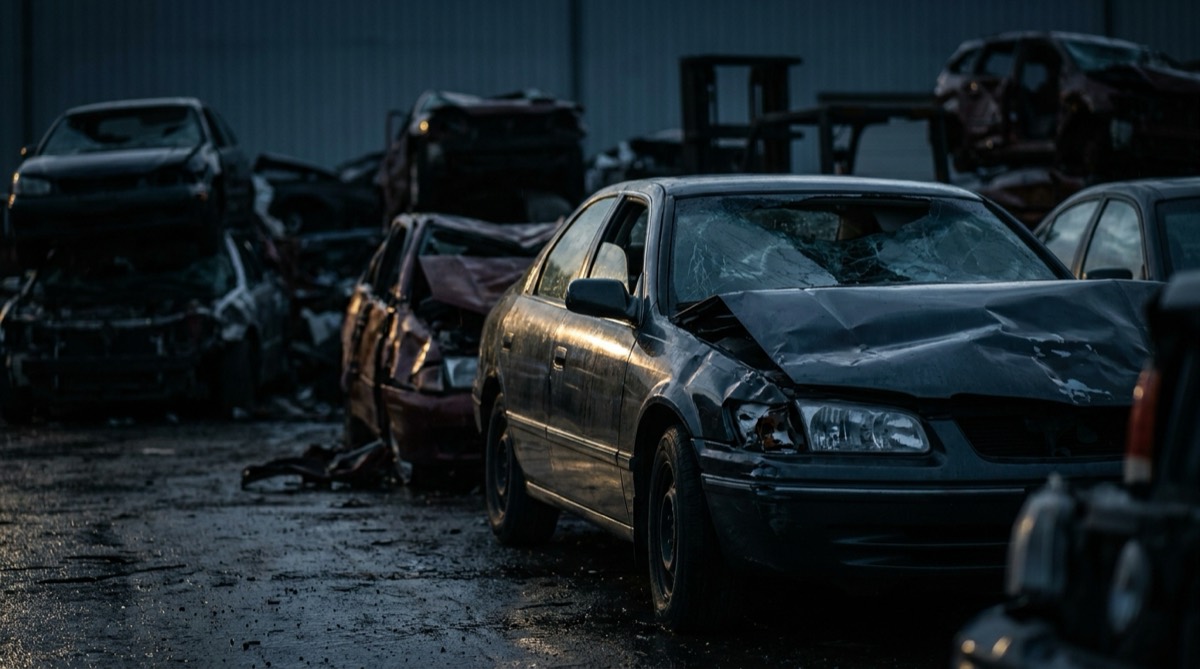
Resale buyers are skeptical of heavy-damage rebuilds even when properly repaired. Frame inspections show prior straightening regardless of cosmetic quality. The market discount expands accordingly.
State Acceptance
Acceptance of branded titles differs by state and by local buyer pool. In markets where buyers are comfortable with rebuilt titles, the effective discount tends to be smaller and cars tend to move faster; in cautious markets the opposite. The mechanism is buyer skepticism, plus financing and insurance availability. We have not measured which states fall where, so check local rebuilt listings and how long they sit.
How Vehicle Class Affects the Discount
Different vehicle segments tolerate branded titles differently.
- Utility vehicles bought for use (work trucks, cargo vans, older sedans for budget buyers) tend to absorb branded titles better.
- Aspirational vehicles bought for status (luxury sedans, performance cars) tend to be discounted harder, because the brand stigma defeats the aspiration.
The pattern is a tendency, not a rule. Compare comps for your model.
Worked Example: The Method
Say a Camry retails clean at $16,000 locally, and you find that comparable rebuilt Camrys ask about 25% less. That is an assumption for illustration, not a market finding. Then $16,000 x 0.75 = $12,000. Replace the 25% with your own comps, and note how many comps you used so you know how much to trust it.
Now the same logic on a heavy-damage luxury car in a cautious market: the discount you measure will likely be wider and the buyer pool smaller, which can erase a spread that looks big on paper. Do the arithmetic with your own repair quote.
Estimate the value for any vehicle.
Open the Salvage Value CalculatorWhat Drives Discounts Wider
Three signals predict a worse-than-usual discount:
1. Photo evidence of unaddressed structural damage
If the lot photos show frame damage, suspension misalignment, or unfixed structural elements, future inspectors will see the same evidence. Discount widens.
2. Multiple title brands
A "salvage AND flood" or "salvage AND theft recovery" combo brand tends to have a worse market reception than either alone. Vehicle history reports list the brands; buyers see them; trust drops.
3. Out-of-state title chain
A car titled salvage in one state, rebuilt in another, retitled in a third raises suspicion. Buyers and lenders can read this as "someone shopped around for a lenient inspection."
What Drives Discounts Tighter
Three signals that can compress the discount:
1. Professional rebuild documentation
Photo log of every repair step, OEM parts receipts, alignment paperwork, body shop invoice. A well-documented rebuild is easier to sell.
2. Strong utility narrative
Truck for work, van for trades, family SUV for in-state daily driving. Buyers focused on function may pay less attention to brand.
3. A state with a clear inspection regime
Virginia, for example, requires a rebuilt salvage vehicle to pass a DMV examination that checks the vehicle is safe and its parts have not been stolen (Virginia DMV). A documented inspection gives out-of-state buyers something to rely on.
Why Vehicle History Reports Permanently Reduce Value
Virginia's DMV says the REBUILT brand is permanent and carries forward on every later title for the life of the vehicle (Virginia DMV). Check your own state's rule, but plan on the brand following the car on vehicle history reports too.
This is permanent depreciation. The discount does not shrink over time the way mileage-based depreciation does.
The only path around this is a buyer who does not run a history report. That market exists (cash buyers, family-and-friends, certain export markets) but is smaller than the full retail pool, and you must still follow your state's disclosure rules.
How to Estimate Your Specific Discount
Five steps:
- Get the clean-retail anchor. Use CarFlipIQ local asking prices for a market median, not a national figure.
- Classify damage severity honestly (light/moderate/heavy).
- Find comparable branded listings near you and compute the gap to the clean median. Note how many comps you used.
- Adjust for vehicle class and documentation. Utility vehicles with a documented rebuild may sit at the narrow end of what you see; aspirational cars with thin paperwork at the wide end.
- Check days on market at your target price. If similar branded cars sit a long time, discount further or accept the holding cost.
Or use the Salvage Car Value Calculator to do the multiplication once you have your discount.
Bottom Line
Salvage and rebuilt titles reduce value, and the amount depends on damage severity, state acceptance, vehicle class and documentation quality. Start from the clean-title anchor, measure the discount from local comps, then adjust. That is where CarFlipIQ's per-ZIP comp tracking helps.
For an interactive estimate: Salvage Car Value Calculator and Rebuilt Title Value Calculator.
See real branded-title prices in your market.
CarFlipIQ tracks asking prices by ZIP. National averages mislead. Local data wins.