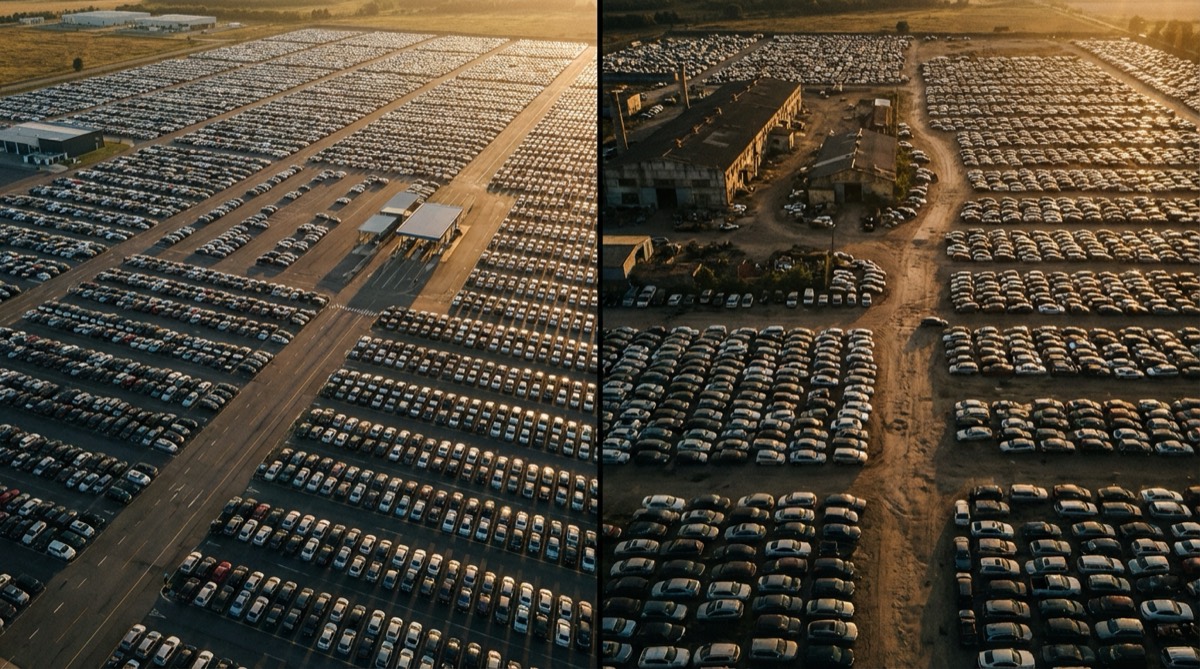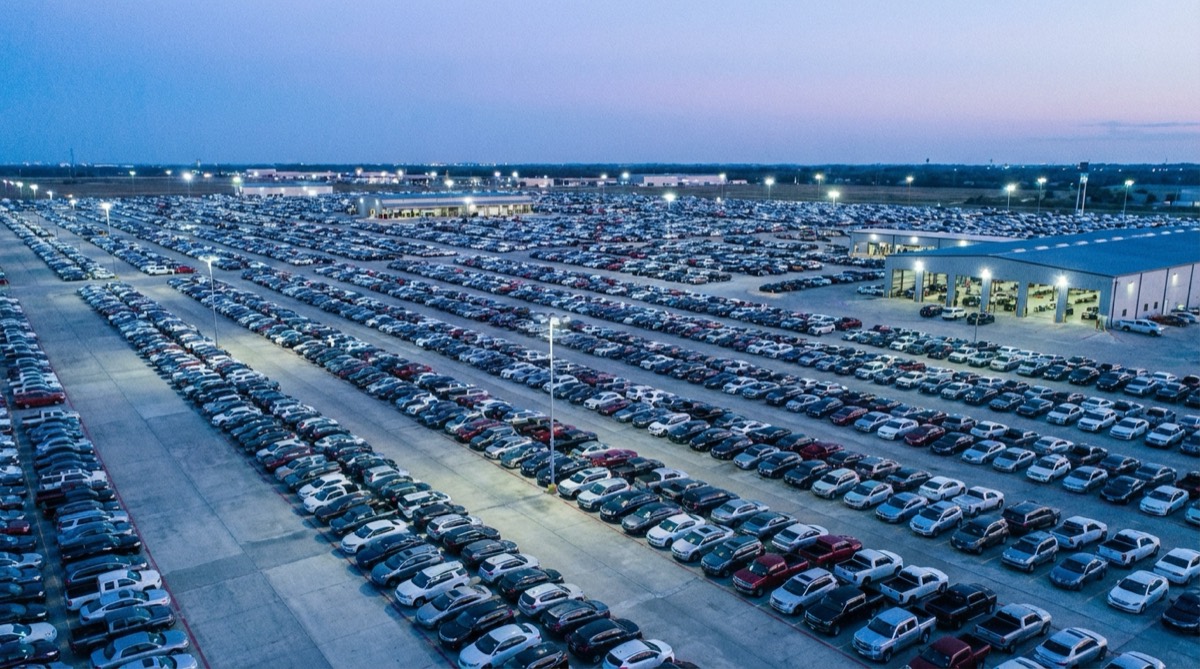
Neither auction is better in general: Manheim and Adesa both sell wholesale to licensed dealers, so the better one is whichever has the inventory you can resell locally for a margin. Compare the specific car's all-in cost against local retail, not the platform. Manheim publishes no national buyer fee table; its Simulcast help page states a standard $50 per vehicle on top of each auction's buyer's fee, and its purchase terms add a 3% late fee after business day 3 (minimum $40, maximum $400). Confirm each auction's current locations and rules on its own site.
This calculator covers only Manheim's late fee. Enter your buy fee from your rate sheet. Estimates only.
LocalIQ™ market snapshot
What top flip candidates are asking right now
| Model | Listings | Median asking price |
|---|---|---|
| GMC Sierra 1500 | 636 | $29,918 |
| Honda Civic | 5,496 | $15,000 |
| Honda Accord | 4,265 | $15,999 |
| Ford F-150 | 3,156 | $24,000 |
| Toyota Corolla | 3,111 | $14,500 |
| Nissan Sentra | 3,087 | $9,800 |
| Toyota Camry | 2,558 | $17,000 |
| Hyundai Elantra | 2,419 | $9,500 |
LocalIQ™ asking-price median · 24,728 listings · updated every 6 hours. National, last 8 model years; asking price is your resale ceiling.
Manheim
Manheim is a large wholesale auto auction network with physical locations and a digital platform. If you have been in the wholesale game for any length of time, you have likely bought or sold through it.
What Manheim Offers
Selection. Manheim's inventory runs through its lanes and online: off-lease vehicles, fleet returns, dealer trade-ins and other consignments. More volume means more options for buyers looking for specific year/make/model combinations.
Simulcast and OVE. Manheim Simulcast lets you bid on live in-lane auctions remotely. OVE (Online Vehicle Exchange) is Manheim's online marketplace. Between the two, you can source inventory without setting foot in a physical auction.
Condition reports. Manheim publishes condition reports on its listings. Read how a report grades and annotates a car before you rely on it, and inspect in person when you can.
Buyer fees. Manheim publishes no national buyer fee table. Its Simulcast help page says a buyer's fee is charged by each Manheim auction, and that Simulcast adds a standard $50 per vehicle on top (Manheim Simulcast help). Manheim's purchase terms add a 3% late fee after business day 3, minimum $40 and maximum $400 (purchase terms). Your actual buy fee comes from your rate sheet. See Manheim buyer fees for the full list. Transportation costs are separate.
Manheim Arbitration
Manheim publishes its arbitration and assurance policies on its policies hub. Read the policy for the sale type you plan to buy in, because the windows and the vehicles covered depend on it.
Know the retail value before you bid. Check any vehicle against 2M+ local listings.
Check a CarAdesa
Adesa is another wholesale auto auction network, and its ownership and structure have changed in recent years. Confirm which locations and digital channels are active today on Adesa's own site rather than relying on older descriptions.
What to Check With Adesa
Condition grading. Ask how Adesa grades condition and what a grade tells you about reconditioning. Knowing the likely recon bill before you bid is critical for flipping cars profitably.
Digital platform. Check which formats are available to you (live simulcast, timed, buy-now) and how inventory looks in your region.
Buyer fees. We have not verified a published Adesa buyer-fee table, so we do not quote one. Ask Adesa for your rate sheet and compare it with your Manheim invoices.
Arbitration. Read Adesa's arbitration policy for the sale type you plan to buy in, and ask about the claim window before you bid.
Side-by-Side Comparison
Here is how the two platforms compare on the points we can state, and what to ask for on the rest.
| Category | Manheim | Adesa |
|---|---|---|
| Buyer fees | Set by each auction; $50 Simulcast add-on stated; no national table | Ask for your rate sheet |
| Late payment | 3% after business day 3, minimum $40, maximum $400 | Ask |
| Digital platform | Simulcast and OVE | Check current channels |
| Condition reports | Published per listing; read how they grade | Ask how grading works |
| Arbitration | Published policies hub | Ask for the policy |
| Registration | Dealer authentication through Auction Access | Confirm current requirements |
CarFlipIQ Works With Both Platforms
Our Chrome extension overlays real retail pricing data on auction lot pages across Manheim, Copart, and IAAI. Know your max bid before you click, no matter which auction you source from.
See how the extension works →How to Choose for Your Strategy
We do not rank the two, because the right auction depends on what you buy and how you plan to exit. Use these questions instead.
Clean Retail Units
Which auction near you lists the year/make/model range you retail locally? Compare the all-in cost of the same kind of car at each, including fees, transport and recon, against local retail asking prices and days to sell. Dealer consignment and trade-in lanes are worth watching, because those are cars other dealers chose not to retail.
Salvage and Damaged Vehicles
If your strategy involves buying damaged or salvage-title vehicles, repairing them, and reselling with rebuilt titles, Copart and IAAI are built for that workflow. Check what each Manheim and Adesa location lists before assuming it has damaged inventory.
Fleet Vehicles and Rental Returns
Check the sale calendars of the auctions near you for fleet and rental-return sales. Fleet cars often come with service records, but read the condition report and the arbitration terms before you bid.
Repos and Bank Vehicles
The key with repo inventory is condition uncertainty. These vehicles often come with limited disclosure, so read the arbitration policy for the sale and use the auction arbitrage tools available in 2026 to cross-reference retail values before bidding aggressively.
Calculate your max bid with real local listing prices -- not estimates.
Check a CarHow CarFlipIQ Helps Auction Buyers Win
Whether you source from Manheim, Adesa, Copart, or IAAI, the fundamental question is the same: What will this vehicle sell for in my local retail market after reconditioning?
CarFlipIQ has analyzed 2M+ vehicle listings across private markets in all 50 US states and metro areas. When you are evaluating a lot at auction, you can pull up the local asking price for that year, make, and model in your target retail market. That gives you a real max bid number, not a guess.
What that looks like in practice:
- You spot a car on Manheim Simulcast and note the current bid.
- You check CarFlipIQ for that year, make, model and trim in your ZIP code and take the median local asking price.
- You list your costs: reconditioning, the buyer's fee from your own rate sheet, transport, and holding cost.
- Your max bid is the median asking price minus those costs and the return you need.
- You bid with confidence because the number is based on local data, and you let the lot go if bidding passes it.
That workflow works identically whether the vehicle is on Manheim, Adesa, or a Copart salvage lot where you are also factoring in repair costs.
Pro Tips for New Auction Buyers
If you are new to wholesale auctions, these fundamentals apply to both Manheim and Adesa.
Get your dealer license first. Manheim says its regular sales are open only to dealers, and registration goes through Auction Access. The specific requirements vary by state. See how to get a car auction dealer license.
Start with online-only. Attend a few simulcast auctions before showing up in person. The online format lets you watch bidding patterns, learn lane timing, and get comfortable with the pace without the pressure of a live auction floor.
Set a hard max bid and do not chase. Auction environments are designed to encourage competitive bidding. Your max bid should be calculated before the lane opens, based on real retail data in your market. If bidding exceeds your number, let it go. There will always be another vehicle.
Factor in all costs. Buyer fees, transportation, reconditioning, title transfer, and holding costs all eat into your margin. A vehicle that looks profitable at hammer price can turn into a loss after all costs are accounted for. Build a spreadsheet or use a dedicated arbitrage tool that includes the full cost stack. Our Manheim fees worksheet shows the lines to include.
Inspect in person when possible. Condition reports are helpful but not infallible. For a higher-priced purchase, the cost of a round-trip to the auction or a third-party inspection service can be worth the insurance against hidden problems.
The Third Option: Copart and IAAI for Salvage
For flippers focused on the salvage-to-retail pipeline, Manheim and Adesa are not the primary platforms. Copart and IAAI (Insurance Auto Auctions) specialize in insurance total-loss, recovered-theft, and damaged vehicles.
Salvage flips carry more risk than clean wholesale, and the result depends on accurately estimating both the repair cost and the retail value in your market.
CarFlipIQ's local pricing data is particularly valuable for salvage buyers because the retail value of a rebuilt-title vehicle varies by market. Knowing your local retail number before bidding is the difference between a profitable rebuild and an expensive lesson.
Read our full guide on sourcing profitably from Copart for salvage-specific strategies.
The Bottom Line
Compare Manheim and Adesa on the things that decide your result: the inventory you can resell, your account's actual fees, the arbitration terms, and your local retail exit price. The best auction buyers use more than one platform and let the deals dictate where they buy.
Regardless of which auction you choose, the key to consistent results is knowing your retail exit price before you bid. Local asking-price data from platforms like CarFlipIQ closes that gap and turns auction buying from speculation into a data-driven business.
Source Smarter from Any Auction
Get local asking prices for any vehicle before you bid. 2M+ listings analyzed across 50 states, regularly updated.