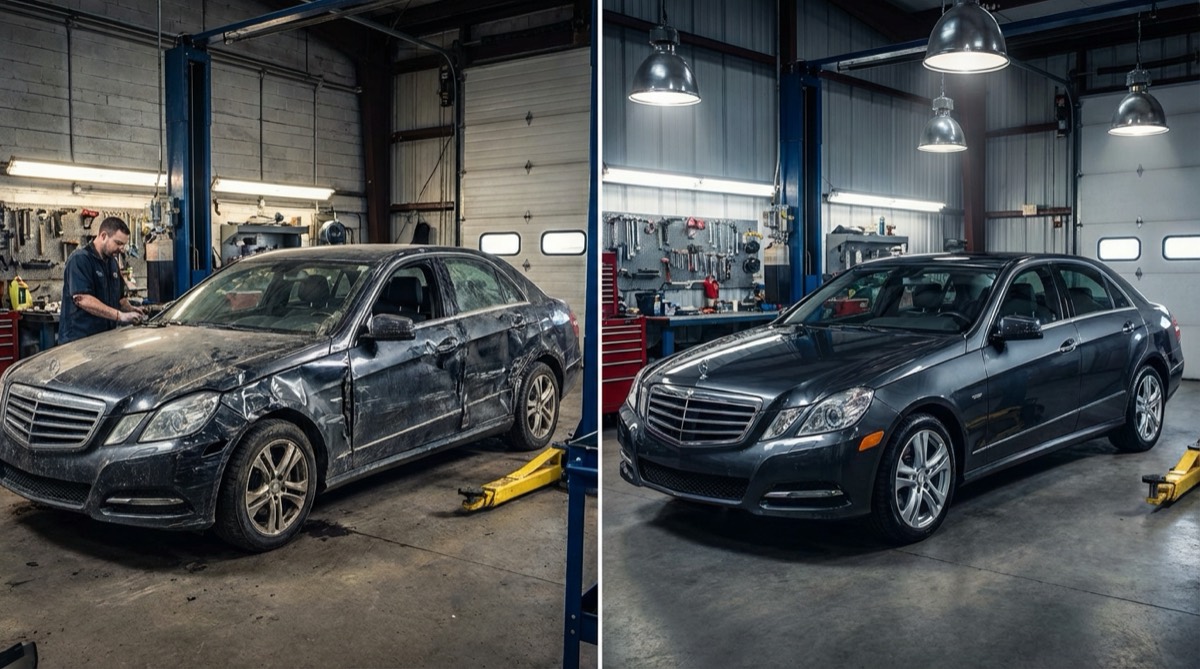
Salvage-title flips offer a bigger purchase discount but carry more repair risk and slower resale, so the arbitrage only pays if your all-in cost sits below what comparable rebuilt cars ask in your market. The purchase price is far below clean retail because the market is pricing in repair cost, risk and a permanent title brand. Whether any discount is left for you depends on the numbers for that specific car.
Calculator values are an example only, not a forecast. Replace every field with your own numbers.
Rebuilt title discounts vary by model and market. Repair costs have real variance. Some states make rebuilt title registration slow. And selling a rebuilt-title vehicle can take longer than selling the same vehicle clean.
This guide gives you the framework for salvage vs. clean title arbitrage and the decision checks professional buyers run before bidding on any salvage lot. We do not publish profit figures or discount percentages here, because we have not measured them with a sample size we can cite.
See retail values for any vehicle before you bid.
Check a CarLocalIQ™ market snapshot
What top flip candidates are asking right now
| Model | Listings | Median asking price |
|---|---|---|
| GMC Sierra 1500 | 636 | $29,918 |
| Honda Civic | 5,496 | $15,000 |
| Honda Accord | 4,265 | $15,999 |
| Ford F-150 | 3,156 | $24,000 |
| Toyota Corolla | 3,111 | $14,500 |
| Nissan Sentra | 3,087 | $9,800 |
| Toyota Camry | 2,558 | $17,000 |
| Hyundai Elantra | 2,419 | $9,500 |
LocalIQ™ asking-price median · 24,728 listings · updated every 6 hours. National, last 8 model years; asking price is your resale ceiling.
How Salvage Title Arbitrage Works
The basic mechanic:
- Buy a damaged vehicle at salvage auction (Copart or IAAI) at a fraction of clean retail value
- Repair the vehicle to a roadworthy standard
- Pass your state's rebuilt title inspection
- Resell with a rebuilt/reconstructed title at a discount to clean retail
The profit, if there is any, lives in the spread between your total cost (acquisition + repairs + fees + transport + holding) and the rebuilt title retail value in your market.
The critical variable: the rebuilt title discount. It varies by model, market and the extent of the original damage (buyers can see title brands on vehicle history reports). Measure it locally: compare the median asking price of clean-title listings with the median asking price of rebuilt-title listings for the same year, make, model and mileage. See rebuilt title value vs clean title for the method.
What Drives the Rebuilt Title Discount by Vehicle Type
Not all vehicles lose equal value with a salvage history. We do not have a measured table by vehicle type to publish, so here are the forces to weigh, not numbers:
- Practical vehicles (common sedans, trucks): the buyer pool is larger, repair quality is easier to verify, and common models have more experienced rebuild shops.
- Luxury and performance vehicles: buyers tend to be more cautious about mechanical complexity and documentation, and parts and labor can cost more, which squeezes the spread from both sides.
- Flood history: buyers are wary regardless of title status, and flood damage is hard to verify.
Check how rebuilt listings of your target model are priced and how long they sit in your market before you assume any of this applies to you.
How to Stress-Test a Salvage Flip
Instead of a worked profit example, here is the checklist to run on any lot. Use your own quotes for every input.
| Line | Where the number comes from |
|---|---|
| Winning bid | Your max bid |
| Auction fees | The Copart fee calculator or IAAI fee calculator |
| Transport | A carrier quote |
| Repairs | A written estimate from the shop that will do the work |
| Inspection and re-titling | Your state DMV |
| Holding cost | The holding cost calculator |
| Total investment | Sum of the above |
| Rebuilt retail value | Comparable rebuilt listings near you |
| Spread | Rebuilt retail value minus total investment |
Then stress-test it: raise the repair line, lower the rebuilt value, and extend the days to sell. If the spread disappears under a modest change, the deal has no buffer. Parts availability and cost for the specific model matter a lot, so price them before you bid. European luxury vehicles in particular call for a hard look at parts and labor cost.
What Makes a Salvage Lot Worth Bidding On
Damage Type Matters More Than Price
The damage category is the primary filter. Here is how each category affects rebuild math:
Generally easier to scope:
- Front-end collision (bumper, hood, airbags) — repair scope is more predictable
- Rear-end collision (bumper, trunk lid)
- Minor dents, hail damage — cosmetic only
Manageable with expertise:
- Side impact — requires frame check, door/panel replacement
- Theft recovery — often mechanically intact, cosmetic damage only
Avoid unless you specialize:
- Flood damage — wiring harness, electronic modules, corrosion can hide
- Fire damage — wiring damage can extend well beyond the visible burn
- Rollover — structural integrity cannot be verified without specialist inspection
- "All over" damage — unpredictable scope, high cost variance
Model-Specific Repair Cost Intelligence
Before bidding on any lot, you need a repair estimate, not a guess:
- Call your body shop and describe the damage
- Check RockAuto and OEM sources for part availability and cost
- Ask the shop about paint and labor
- Add a contingency for hidden damage not visible in auction photos, and make it bigger for uncommon models or damage types you have not rebuilt before
CarFlipIQ Salvage Check Tool
Elite plan members can run instant salvage analysis on any lot — see local retail value, comparable rebuilt-title pricing, and a max bid calculation that accounts for your repair estimate.
See Elite plan features →Rebuilt Title Resale: What Buyers Look For
Understanding the buyer's perspective on rebuilt titles helps you price and market rebuilt vehicles more effectively.
Buyers want documentation. Before-and-after photos of the repair, receipts from licensed body shops, and the rebuilt title inspection certificate all reduce buyer anxiety. A rebuilt-title vehicle with thorough documentation is easier to sell than one with no repair records.
Disclosure is non-negotiable. Check your state's disclosure rules before you list. Attempting to conceal a title brand is fraud, and vehicle history reports show title brands, so any buyer who runs a report will find it.
Pricing strategy for rebuilt titles: List at the rebuilt-title retail price (clean price minus the local discount), not at clean retail. Buyers researching rebuilt-title vehicles know the discount exists and will negotiate if you list at clean-title pricing.
Where to sell rebuilt-title vehicles: Private sale platforms and local market listings reach buyers who are actively seeking rebuilt-title deals. Dealer lots may not want rebuilt inventory. Auction resale at Copart or IAAI is always an option but may yield lower prices than retail.
The Decision Framework: Should You Bid on This Lot?
Run through these five questions before bidding on any salvage lot:
1. What is the local retail value (clean title)? Use CarFlipIQ to check actual comparable listings in your market. This is your starting number.
2. What is the rebuilt title discount in your market? Measure it from comparable clean and rebuilt listings near you. It varies by model and market.
3. What is your realistic repair estimate? Get a written estimate from your body shop. Add a contingency buffer for hidden damage.
4. What are your all-in acquisition costs? Auction fees + transport + title inspection. Use the Copart and IAAI fee calculators for the auction part.
5. Does the math work?
Rebuilt Retail − Total Investment > Target Profit
If the answer is no, or "maybe if nothing goes wrong," pass on the lot. There will always be another vehicle.
Know Your Retail Number Before You Bid on Any Salvage Lot
CarFlipIQ shows you local market retail values for clean and rebuilt title vehicles. Calculate your real max bid before the auction opens.