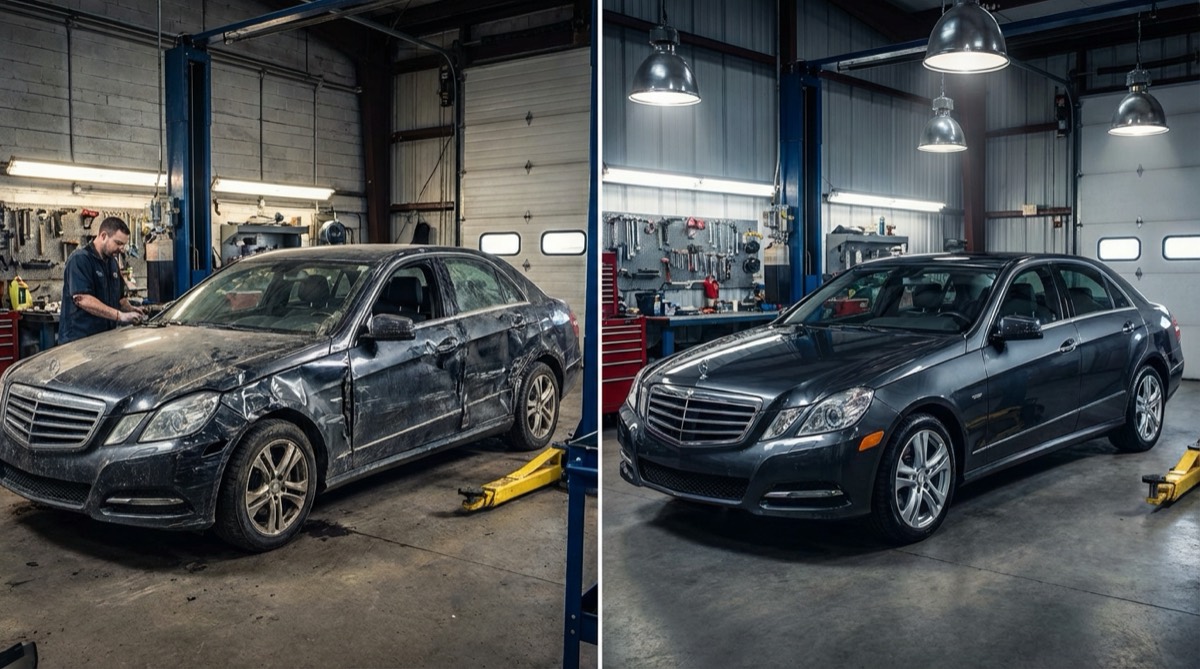
A salvage title means the car was declared a total loss and has not been repaired and re-inspected; a rebuilt title means it was repaired, passed a state inspection and was re-titled for road use. Confusing the two can cost you thousands at resale or stop a deal cold at registration. In CarFlipIQ's model, salvage runs 30% to 65% below the same car with a clean title and rebuilt 20% to 45% below.
Ranges are CarFlipIQ's own model estimates by damage severity, not sale prices. Also available as the standalone rebuilt title value calculator.
LocalIQ™ market snapshot
What top flip candidates are asking right now
| Model | Listings | Median asking price |
|---|---|---|
| GMC Sierra 1500 | 636 | $29,918 |
| Honda Civic | 5,496 | $15,000 |
| Honda Accord | 4,265 | $15,999 |
| Ford F-150 | 3,156 | $24,000 |
| Toyota Corolla | 3,111 | $14,500 |
| Nissan Sentra | 3,087 | $9,800 |
| Toyota Camry | 2,558 | $17,000 |
| Hyundai Elantra | 2,419 | $9,500 |
LocalIQ™ asking-price median · 24,728 listings · updated every 6 hours. National, last 8 model years; asking price is your resale ceiling.
The Single-Line Difference
- Salvage title — the vehicle was declared a total loss and has NOT been repaired and re-inspected.
- Rebuilt title — the vehicle was a salvage, was then repaired, passed a state inspection, and was re-titled for road use.
A salvage car is paperwork. A rebuilt car is paperwork plus a roadworthy vehicle.
The Lifecycle
A typical branded vehicle moves through this sequence:
- Clean title — normal road-going vehicle
- Total loss event — collision, flood, fire, theft, or hail damage exceeds insurance threshold
- Salvage title issued — insurance company takes ownership, sells at auction (Copart, IAAI)
- Buyer purchases — buyer takes the salvage car to a shop (or their own garage)
- Repair completed
- State inspection — varies by state in rigor
- Rebuilt title issued — vehicle is now legal to register and drive
A car sold at Copart or IAAI is almost always at step 3 (salvage) — not step 7 (rebuilt). The buyer is responsible for steps 4-7.
What Each Title Allows
Salvage title
- Cannot be registered for road use in most states
- Cannot be driven on public roads except for specific repair-related purposes (varies by state)
- Insurance depends on the insurer and is generally a problem until the car is re-titled; ask before you buy
- Can be sold privately (with full disclosure)
- Can be parted out
- Can be transported on a trailer
Rebuilt title
- Can be registered for road use
- Can be driven on public roads
- Liability is usually available; comprehensive depends on the insurer (see below)
- Can be sold to retail buyers (with full disclosure)
- Will permanently show on CARFAX and AutoCheck as previously salvage
The Re-Titling Process by State
State rules for converting salvage to rebuilt vary: who inspects, how thorough the inspection is, and what documentation is required. Virginia, for example, requires a rebuilt salvage vehicle to pass a DMV examination to ensure the vehicle and its parts are in safe operating condition and have not been stolen, and the title then carries a permanent REBUILT brand (Virginia DMV). Consumer Reports notes that other states have their own extra steps, such as New York's DMV inspection before a new title is issued (Consumer Reports).
Typical paperwork a state may ask for:
- VIN verification against title and parts
- Receipts for major replacement parts (engines, transmissions, frames)
- Photo documentation of the rebuild process
- A hands-on safety inspection
Read your own state's DMV page before you buy a salvage car, because the process decides how long the car sits and whether it can be re-titled at all. A car repaired in one state and sold in another still carries the brand.
Resale Value Comparison
Price each stage against the same anchor: the clean-title retail price for the same year, make, model, trim and mileage in your market.
| Title Status | How it is priced |
|---|---|
| Clean | The anchor |
| Rebuilt (well-documented) | Clean comp minus a brand discount you confirm with local rebuilt comps |
| Rebuilt (poorly documented) | A wider discount, because the buyer cannot verify the repair |
| Salvage (unrepaired) | Rebuilt value minus repair, inspection and re-titling cost and your risk |
The rebuilt title recovers part of the value gap, but the brand stays on the history. We do not publish a single discount percentage here, because we have not measured one with a sample size we can cite. Use local comps.
For interactive estimates: Salvage Car Value Calculator and Rebuilt Title Value Calculator.
Insurance Differences
Salvage
A salvage-titled car generally cannot be registered for the road, so coverage is rarely the first question; it is a problem to solve after re-titling. Insurer policies differ, so ask each carrier before you buy.
Rebuilt
Consumer Reports says you can usually get liability insurance for a rebuilt-title car, but you might not be able to get comprehensive coverage (Consumer Reports). Beyond that, coverage and premiums are a quote from a specific insurer in a specific state. Call several carriers, including smaller regional ones, and get the answer in writing.
The practical workaround for many flippers: sell the rebuilt car to a buyer who is comfortable running liability-only. That buyer pool is smaller than the full retail pool.
Financing Differences
Salvage
A salvage-titled car is not road-legal, so a lender has little to lend against. Plan on cash.
Rebuilt
Whether a lender will finance a rebuilt title, and on what terms, is each lender's own policy. We could not verify any lender policy from a primary source, so we do not name lenders or terms. Ask your bank or credit union before you buy, and assume your buyer pool depends on which lenders will lend.
When to Choose Each as a Flipper
Buy salvage when:
- You have repair capability (your own shop, a partner shop, in-house body work)
- You operate in a state with reasonable rebuild inspections
- Your customer pool is comfortable with rebuilt titles (cash buyers, working-class markets, trade-focused vehicles)
- You can manage the multi-week repair-to-resale cycle
Buy rebuilt (already-titled) when:
- You want to skip the rebuild process and resell immediately
- You can verify the rebuild was done well (photos, receipts, inspection paperwork)
- The gap between your cost and local rebuilt comps works for your market
Skip both when:
- You need financing on your acquisition
- You sell to retail buyers who refuse branded titles
- You operate in a low-acceptance market without local repair infrastructure
See branded-title resale values for any vehicle.
Check a CarCARFAX and AutoCheck Reporting
Both major vehicle history services report title brands permanently. Every CARFAX report on a previously-salvage car will show:
- Date of total-loss event
- Original cause (collision, flood, etc., where reported by insurer)
- Salvage title issuance date and state
- Rebuilt title issuance date and state (if applicable)
- Subsequent state-to-state title transfers
This history follows the VIN forever. There is no legal way to remove or hide it. Buyers will see it. Pricing the brand correctly into your sale is the only way to move inventory.
The Honesty Test
When you sell a rebuilt-title vehicle, state law governs what you must disclose; check your state's rules before you list. Failing to disclose a title brand can expose you to refund demands, damages and fraud claims.
Smart flippers disclose proactively, document the rebuild thoroughly, and price the vehicle for the branded segment. That is faster than hiding the brand and getting caught.
Bottom Line
Salvage and rebuilt are two stops on the same vehicle's lifecycle. Salvage cars cost less but are paperwork-only. Rebuilt cars cost more (because someone did the repair work) but are real road-going vehicles. Resale value, financing access, insurance availability, and buyer acceptance all change between the two stages.
The flipper's question is whether you want to be the one doing the rebuild (buy salvage) or buy someone else's rebuild and skip straight to resale (buy rebuilt). Both work. The math is different for each.
Use the Salvage Car Value Calculator and Rebuilt Title Value Calculator to set expectations for either path.
Don't bid blind on branded titles.
CarFlipIQ tracks salvage and rebuilt resale by ZIP. See exactly what your market pays.